Editorial
During the State of the Capital Address at UNISA on April 16, 2026, Executive Mayor Dr Nasiphi Moya delivered a message of optimism, stating that Tshwane is stabilising, recovering and entering a new phase of renewal. The setting was formal and forward-looking, and the speech leaned heavily on data, reform and renewed fiscal discipline.
But beyond the auditorium, in communities such as Hammanskraal, Temba, Soshanguve, Mabopane, Ga-Rankuwa, Atteridgeville and Mamelodi, renewal carries a far more practical meaning. It is not defined by balance sheets or investment pledges. It is measured by whether water runs from the tap, whether electricity remains stable, whether refuse is collected on time and whether infrastructure works without constant crisis.
A city as complex as Tshwane must operate on many fronts at once. Financial stability matters. Institutional reform matters. But the true test of renewal will not be applause inside the chamber, it will be the lived experience of residents across the region.
The Mayor spoke of a funded budget, improved reserves, debt management and governance reform. These are important foundations. Without financial stability, sustainable service delivery is impossible. If maintained, these reforms could create the conditions for long-term recovery.
But recovery on paper must translate into recovery in communities.
Nowhere is that test more visible than in Hammanskraal. In her address, the Mayor acknowledged the area as a key pressure point and referenced progress at the Klipdrift Water Treatment Plant. Those upgrades represent a long-overdue investment.
Yet communities like Hammanskraal have learned that progress announced is not always progress sustained.
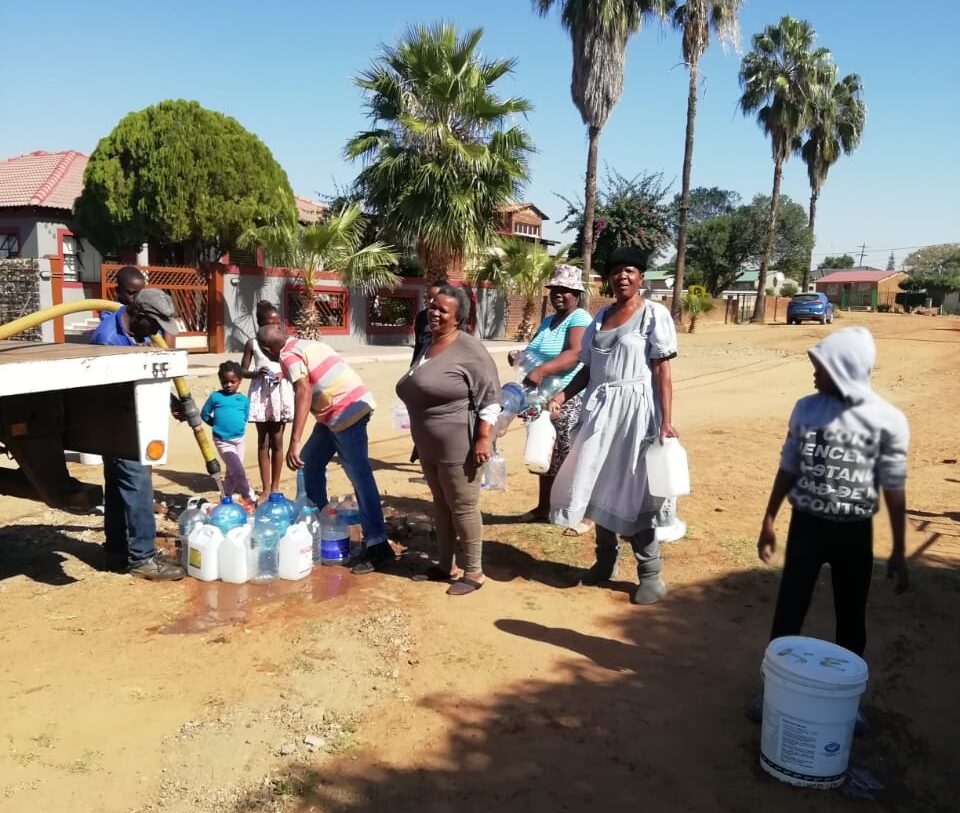
For more than a decade, residents endured inconsistent and, at times, unsafe water. The 2023 cholera outbreak remains a painful reminder of what prolonged infrastructure failure can cost. Tankers became routine. Buckets became permanent fixtures in households. Uncertainty became normal.
The City maintains that sections of Hammanskraal are seeing improvements, yet for many residents, trust has not fully returned. Trust grows through lived consistency, not reported milestones.
The recent disruption at Sebothoma Hall in Temba, following the Mayor’s absence at a scheduled meeting on water shortages, indicated how fragile that trust remains. Residents arrived seeking engagement on an issue shaping their daily lives. Some openly stated they had come without water for washing, while officials addressing them came from areas with a stable supply. The frustration went beyond a missed appearance, it reflected accumulated fatigue.
But Hammanskraal is not alone in measuring renewal through basic services.
In Soshanguve and Mabopane, electricity outages and ageing substations remain persistent concerns. In Ga-Rankuwa, Atteridgeville and Mamelodi, residents are watching closely to see whether infrastructure upgrades translate into fewer disruptions. Across townships, overloaded transformers, cable theft and recurring failures continue to erode confidence.
Within this broader electricity strain, the recent intergovernmental intervention in Hammanskraal, led by Premier Panyaza Lesufi and Minister of Electricity and Energy Dr Kgosientso Ramokgopa, adds an important layer to the recovery effort. The six-to-seven-week stabilisation plan, centred on installing smart meters and formalising electricity connections ahead of winter, aims to reduce load reduction by addressing infrastructure overloading at its source.
If implemented transparently and consistently, the initiative could contribute meaningfully to network stability. Indigent households are expected to receive free basic electricity directly through the system, and residents facing financial hardship are encouraged to engage with the formalisation process rather than remain outside it.
However, installation alone will not resolve long-standing frustrations. Clear communication, fairness in enforcement and measurable reductions in outages will determine whether this intervention builds confidence or deepens scepticism. Progress must be demonstrated in lived experience.
Housing presents another test. The issuing of title deeds, the formalisation of informal settlements and expanded rental strategies speak to dignity and security. Yet they must unfold transparently, particularly where relocations are involved. Renewal must not create uncertainty in the name of order.
On investment, the R86 billion announced at the Tshwane Investment Summit carries promise, especially in automotive expansion in Rosslyn and township-based enterprise support. But communities will measure these pledges not in rand value, but in jobs created, SMMEs included and opportunities fairly distributed.
The same principle applies to indigent support, food banks, apprenticeships and youth programmes. Social renewal cannot remain aspirational, it must reach households consistently and equitably.
Governance reform may be the least visible but most important foundation of all. Improved audits, consequence management and oversight are necessary. Without them, service delivery falters again. Reform is not proven by announcements of investigations, it is proven by concluded cases and sustained compliance.
The Mayor acknowledged that the City is not yet where it wants to be. Honesty is important. But the distance between intention and impact must narrow steadily.
As Moretele Times and our sister publications, Ga-Rankuwa Times, Mabopane Times, Soshanguve Times, Pheli Times, Mamelodi Times and Student Times, our role remains consistent. We are neither adversaries of progress nor uncritical amplifiers of power. We are observers on behalf of the communities we serve.
We will return to Hammanskraal to test water reliability.
We will track electricity stabilisation across townships.
We will monitor whether investment pledges become construction sites and pay slips.
We will follow housing projects beyond ceremonial groundbreakings.
We will report when delivery improves, and when it does not.
Renewal is a powerful word. But its meaning will remain incomplete until it is felt, not occasionally, not ceremonially, but permanently, in communities across Tshwane.
Because in the end, renewal is not proven in speeches.
It is proven in service delivery that works.