Tales of My Father Series
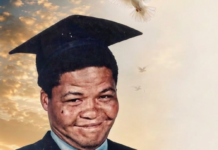
Sephiri William Sebokedi-Phetlhu (1927–2027)
Theme: Philanthropy Through Education
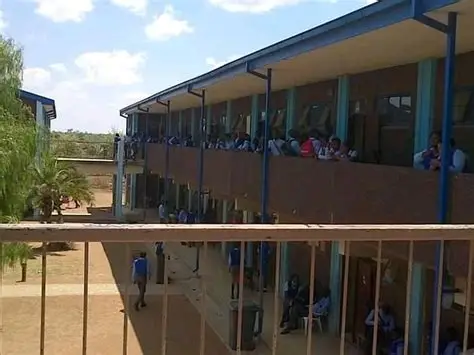
The establishment of Unit D in Hammanskraal is a story born from hardship, resilience, and visionary leadership. What began as a response to devastating floods along the Tshwane River in Leboneng evolved into the foundation of a thriving community, and, significantly, the birth of PHL Moraka High School.
Following the floods in Leboneng, families living along the banks of the Tshwane River were displaced and evacuated to a temporary tent settlement on open veld near what is now Temba Stadium. From this site of uncertainty emerged Unit D, a new suburb developed on previously state-owned grazing land. Under the leadership of then-Mayor Ntate Tlhabane, the area transformed rapidly from a place of crisis into a structured residential community.
A formal town plan was introduced, and construction commenced. The first houses were compound units, two attached dwellings, allocated primarily to flood victims. These were followed by L-shaped homes, popularly known as di-Boots, which were mainly allocated to civil servants such as teachers, nurses, and law enforcement personnel through state-supported housing schemes. Additional developments included apartments for school inspectors, housing for transport sector employees, and accommodation for members of the Bophuthatswana Police Service.
Unit D also became home to Percy Manyaapelo, the first District Governor of Moretele 1 in greater Hammanskraal. Residents were further offered freehold plots, enabling those with private means to build independently funded homes. Over time, the eastern side of Unit D flourished with impressive residences, including several double-storey homes owned by prominent businessman Jacob Leburu Mphafudi.
As the suburb expanded, so did the demand for essential services, most urgently, access to education. Learners were compelled to travel long distances to schools in Majaneng or cross busy, dangerous roads to reach schools in Temba. Tragedy struck when two children lost their lives in a road accident while commuting. This heartbreaking incident became a turning point, galvanising the community to demand local schools.
Although the original town plan provided for educational facilities, implementation required advocacy and decisive leadership. At this critical moment, Sephiri William Sebokedi-Phetlhu, together with respected community leader and political figure Abel Ramatlhaswana “Senty” Sentle, rose to champion the cause.
They engaged the Bophuthatswana government, lobbying the Ministries of Education and Public Works for the urgent construction of schools in Unit D and the surrounding areas. Their advocacy was strategic and persistent. A delegation, convened by Sebokedi-Phetlhu, chaired by Sentle, and comprising Ntate Mamarege, Ntate Ratlhogo, and Ntate Malefatlho, travelled to Mmabatho to formally present the community’s case.
With the support of Minister of Public Works Ntate Tlhabane, the matter was elevated to President Lucas Mangope. The outcome marked a significant victory: approval for the construction of four new schools in Temba, Kgetsiyatsie Middle School, Mmamotse Primary School, and two high schools in Unit D, PHL Moraka High School and Sikhululekile High School.
Upon completion of the first high school in Unit D, Sebokedi-Phetlhu and Sentle returned to propose possible names for the institution. Among the names submitted, Dammie High School, Tlhabane High School, and PHL High School, the name PHL Moraka High School was ultimately approved.
Their commitment did not end with construction. Sebokedi-Phetlhu and Sentle provided stewardship in establishing the school’s governance and leadership structures. Emmanuel Motolla was appointed as the first principal, assisted by Deputy Principal Mrs Manyane. Mr Molefe Thibedi became the first Chairperson of the School Governing Body, with Sentle and Mamarege serving as secretary and treasurer, respectively.
Today, PHL Moraka High School stands as a living monument to what can be achieved when community leadership, government partnership, and a shared vision for education converge. It is more than a school; it is hope forged from adversity.
As we commemorate the centenary of Sephiri William Sebokedi-Phetlhu, born on 3 March 1927 in Makweteng, Klerksdorp, his legacy continues to call us to action. His life reminds us that true success lies not in accumulation, but in contribution; not in individual advancement, but in collective upliftment.
The centenary celebrations present a meaningful opportunity to honour this legacy through renewed philanthropy in education. Through the Commemorative Centenary Charity Crowdfunding Campaign, individuals, businesses, and institutions are invited to support a focused initiative: providing school shoes to selected learners at PHL Moraka High School.
For many learners, something as simple as a pair of school shoes can make a profound difference, restoring dignity, improving daily comfort, and enabling consistent attendance. By supporting this initiative, donors will not only meet an immediate need but also strengthen educational access and inclusion.
This campaign reflects the essence of Sephiri William Sebokedi-Phetlhu’s legacy, practical, community-driven philanthropy that responds directly to lived realities. It continues his lifelong commitment to ensuring that no child is left behind because of circumstances.
In contributing to this cause, we do more than give; we invest in confidence, dignity, and the future of every learner. Together, we walk forward in his footsteps, ensuring that his vision of empowerment through education continues to shape generations to come.
In remembering Sephiri, we do more than reflect; we recommit. His legacy lives on in every learner empowered, every opportunity created, and every life transformed through education.
Acknowledgement:
This article was written with contributions from Abel Ramatlhaswana “Senty” Sentle, a retired community member who has played a valuable role in the development of the Temba community over the past five decades, since the 1970s, as an educator, business entrepreneur, and community leader.