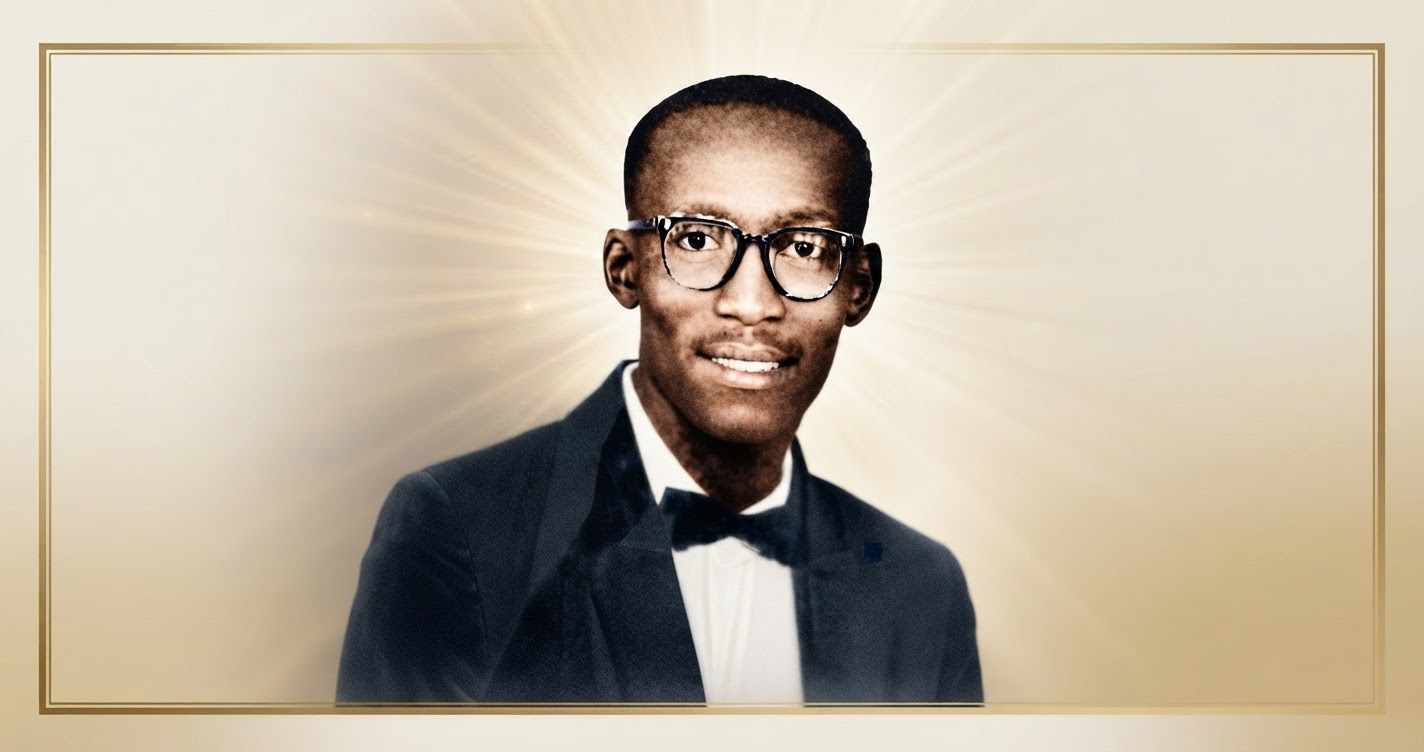
This past weekend, on 4 July 2026, the Greater Hammanskraal and Moretele communities marked what would have been the 96th birthday of Chief Hans Malesela Dikgadima Kekana (1930–1962), a leader whose life, though brief, permanently altered the developmental trajectory of the Amandebele-a-Lebelo and the wider region. As the commemorations conclude, it is fitting to offer a belated tribute to a traditional authority whose vision continues to resonate more than six decades after his untimely passing.
Chief Hans’s reign ended tragically in a motor vehicle accident on 1 December 1962, when he was only 32 years old. Yet within those few years of leadership, he articulated and embodied a model of governance rooted in education, healthcare, faith, social cohesion, and economic empowerment. Married to Hildah Esther Kekana (1940–2021), he believed firmly that the future of his people depended on investing in human potential and building institutions capable of serving generations beyond his own.
Although several schools predated his accession to the chieftainship, they flourished under his stewardship. Seroto Masetlha Primary School, Kekana Primary School, and Ratshepo High School, later renamed Hans Kekana High School in his honour, became anchors of learning for children from Majaneng, Kekana, Lehwelereng, and neighbouring communities. These institutions were not merely classrooms, they were gateways to opportunity in a society constrained by systemic exclusion.
Their importance deepened following the establishment of Temba in 1942, which coincided with the forced removals of African families from various parts of the Pretoria region. Many displaced residents initially settled in Sofasonke, a tent settlement near the Apies River on the Bezuidenhout Farm, where access to schools, clinics, and churches was severely limited. During those formative and uncertain years, the educational and social infrastructure within Amandebele-a-Lebelo communities became a lifeline. The institutions supported during Chief Hans’s tenure, therefore, assumed regional significance, producing generations of teachers, nurses, civil servants, clergy, entrepreneurs, and professionals who would later contribute to South Africa’s democratic development.
Healthcare formed another cornerstone of this developmental vision. Facilities such as the Old Kekana Clinic in Majaneng and the Lehwelereng Clinic provided primary healthcare long before comprehensive provincial services reached the area. Dedicated nursing pioneers, including Sister Dorah Mashiane (1914–1991), Thubakgale, Makgetha, and Matlhare, extended professional care to rural communities with limited resources. House No. Q267 in Oustad became synonymous with community-based healthcare under Sister Mashiane’s service. The establishment of Jubilee Mission Hospital by Swiss missionaries in 1966 further strengthened the regional health system, reinforcing a culture of collaboration between traditional leadership, churches, and residents.
The broader developmental vision associated with the Amandebele-a-Lebelo leadership also extended into economic transformation. Historical accounts indicate that traditional land later contributed to the establishment of the Babelegi Industrial Park in the 1970s. At its height between the 1970s and early 1990s, Babelegi stood among South Africa’s largest decentralised industrial estates, providing employment to thousands and stimulating the growth of supporting enterprises. Public transport services such as Botlhaba Bus Services, retail centres including Afrisport and Temba City, hospitality establishments such as The Carousel Hotel, and expanding banking and commercial facilities emerged alongside industrial growth.
These developments, coupled with the expansion of government services and vocational training institutions in policing, nursing, theology, commerce, and technical skills, transformed Greater Hammanskraal into one of northern Gauteng’s most significant regional hubs. Residential communities such as Manyeleti, Leboneng, Renstown, Unit D, and Stellenbosch grew as an emerging African middle class took shape, sustained by education and employment opportunities rooted in earlier institutional investments.
The schools strengthened during this era also became incubators of artistic, cultural, and sporting excellence. Music, drama, debate, athletics, football, and netball cultivated a vibrant civic culture. The region produced footballers of national and international acclaim, including Steven “Kalamazoo” Mokone, Thomas (Whose Fooling Who) Hlongwane, and Magic Matjila. It nurtured creative talents such as sculptor Lucky Sibiya, musician Sello Galane, members of the Gigis of Temba Town, journalist Bongani Madondo, and author Gaongalelwe Tiro. These achievements testify to the enduring intellectual and cultural capital born from sustained community investment.
As the echoes of this past weekend’s heavenly birthday commemorations settle, the life of Chief Hans Malesela Dikgadima Kekana reminds us that visionary leadership is measured not by its length but by its lasting impact. His service laid foundations upon which subsequent generations have built resilient communities, vibrant institutions, and thriving local economies. In remembering him, even belatedly, we honour a leader whose commitment to education, healthcare, faith, and human dignity remains woven into the living history of the Amandebele-a-Lebelo and the broader story of South Africa’s community resilience and inclusive development.