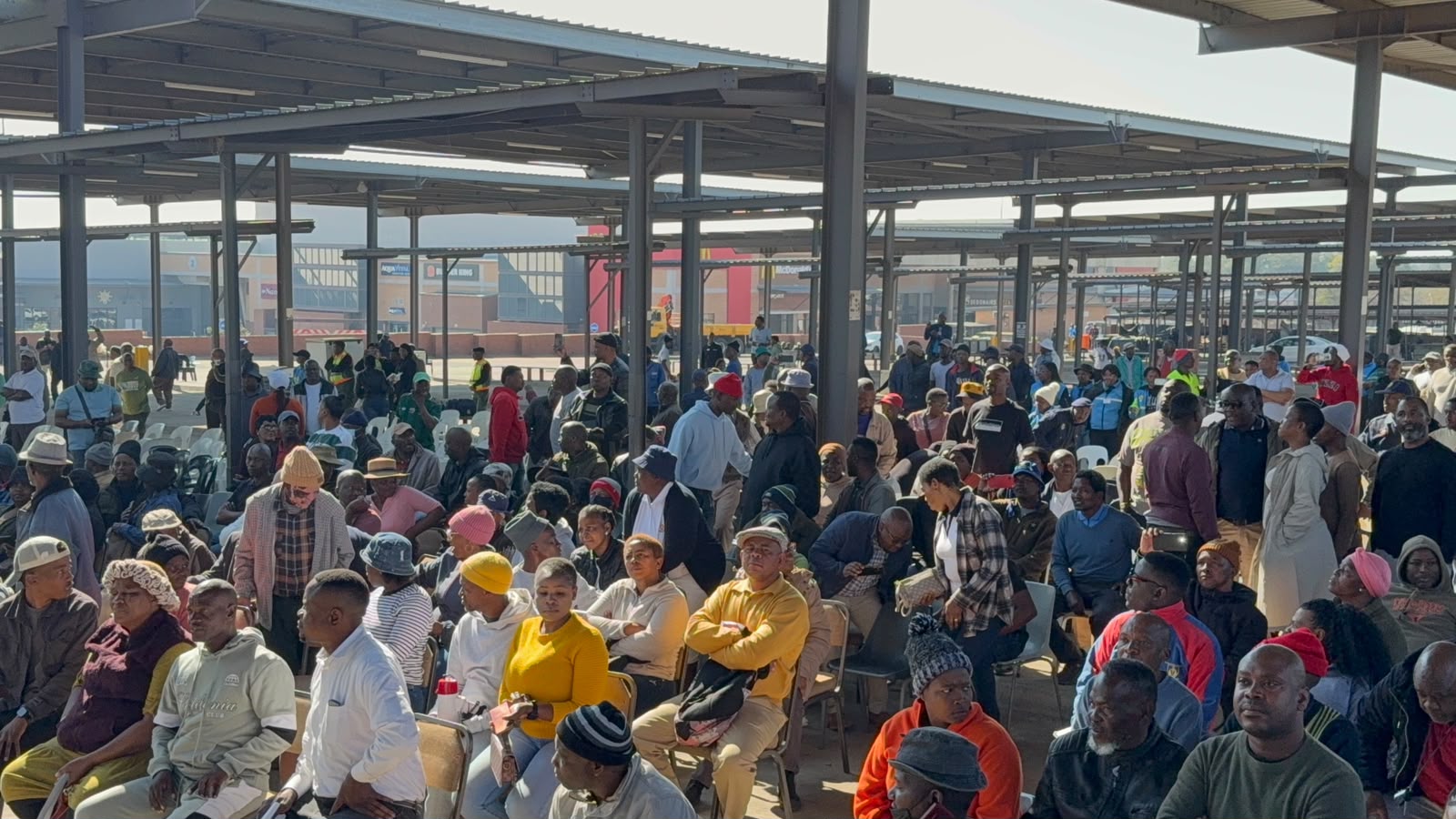
Economic decay and transport failure are eroding livelihoods, stability and dignity in Hammanskraal.
Nearly two decades after provincial boundaries shifted, Hammanskraal remains caught in a transition that has yet to be fully concluded, a place where the province changed hands but certain administrative and contractual matters were never comprehensively resolved, and where residents continue to carry the social and economic weight of that unfinished process.
What was presented during the 2005 and 2006 boundary demarcation as constitutional realignment has, over time, hardened into generational hardship. The consequences are no longer confined to correspondence between provincial offices, they are visible in homes, workplaces and in the daily strain of families stretched by distance and cost. Residents are not debating legal undertakings arising from that mid‑2000s shift, they are calculating transport fares before sunrise and returning long after sunset, travelling more than 50 kilometres to reach jobs that once existed within walking distance.
There was a time when many walked to factories at Babelegi Industrial Park, earning a living within sight of their homes and raising families around a functioning local economy. As those industries declined, broader economic pressures were compounded by unresolved intergovernmental arrangements, with infrastructure still tied to North West while the factories fell under Gauteng’s jurisdiction. That overlap created uncertainty, which may have discouraged investment and complicated revitalisation efforts. Over time, residents were pushed outward in search of survival. A short walk to work became a daily migration, turning mobility into the fragile bridge between employment and unemployment, a bridge now further strained by transport instability and unresolved contractual matters.
The collapse of subsidised bus services linked to North West Transport Investment has intensified these pressures. Some workers report losing their jobs after buses went off the road because they could no longer afford daily travel or reliably reach their workplaces. Others now spend up to R120 a day simply to remain employed. For households already balancing rent, food and school costs, that additional expense can significantly destabilise fragile budgets.
The damage does not end with finances. Parents often leave home while their children are still asleep and return when they are asleep again, reducing everyday interaction to brief and exhausted moments. At a recent community engagement, some young people spoke of barely knowing their parents because work and travel consume the day. When commuting erodes time meant for homework supervision, school involvement and shared meals, family life inevitably thins. In communities already strained by unemployment and stagnation, prolonged parental absence and economic pressure can increase vulnerability to alcohol abuse, drug exposure and other social risks. This is not alarmism, it reflects how economic and social pressures intersect over time.
The responsibility for resolving these outstanding matters now rests with the current administrations of Gauteng and North West. While the origins of the dispute stretch back nearly two decades, its consequences are present and unfolding today. The unresolved contracts, incomplete transfers and lingering uncertainty around transport and infrastructure remain active governance challenges. Leadership is measured not only by the problems inherited but by the resolve applied in addressing them.
These unresolved matters also affect those tasked with implementation. MECs responsible for transport, infrastructure and economic development operate within frameworks shaped by asset ownership, contractual obligations and unsettled financial arrangements. Without executive clarity at the highest level, policy interventions risk remaining constrained or temporary. Administrative uncertainty filters downward, limiting the very officials expected to restore stability on the ground.
Intergovernmental coordination is not optional, it is a constitutional obligation. When agreements arising from demarcation are not fully concluded, the cost is felt most directly by communities. Hammanskraal’s residents have adapted repeatedly, first when Babelegi declined, then when affordable transport faltered, yet structural ambiguities persist.
The boundary shifted nearly twenty years ago. Authority followed. The remaining administrative and contractual matters must now be concluded with transparency and clear timelines to restore certainty for commuters, businesses and families alike.
Hammanskraal has waited long enough. Economic decline, transport disruption and strained family life are not abstract governance debates, they are lived realities shaping daily existence. The premiers of Gauteng and North West are uniquely positioned to bring clarity and finality to this longstanding issue. Each additional month of delay prolongs uncertainty for workers, parents and young people who have lived with its effects since the 2005–2006 demarcation process. Children who were infants at the time are now young adults navigating the same structural pressures, and without decisive resolution, those pressures risk becoming entrenched across generations, becoming a self‑perpetuating cycle.