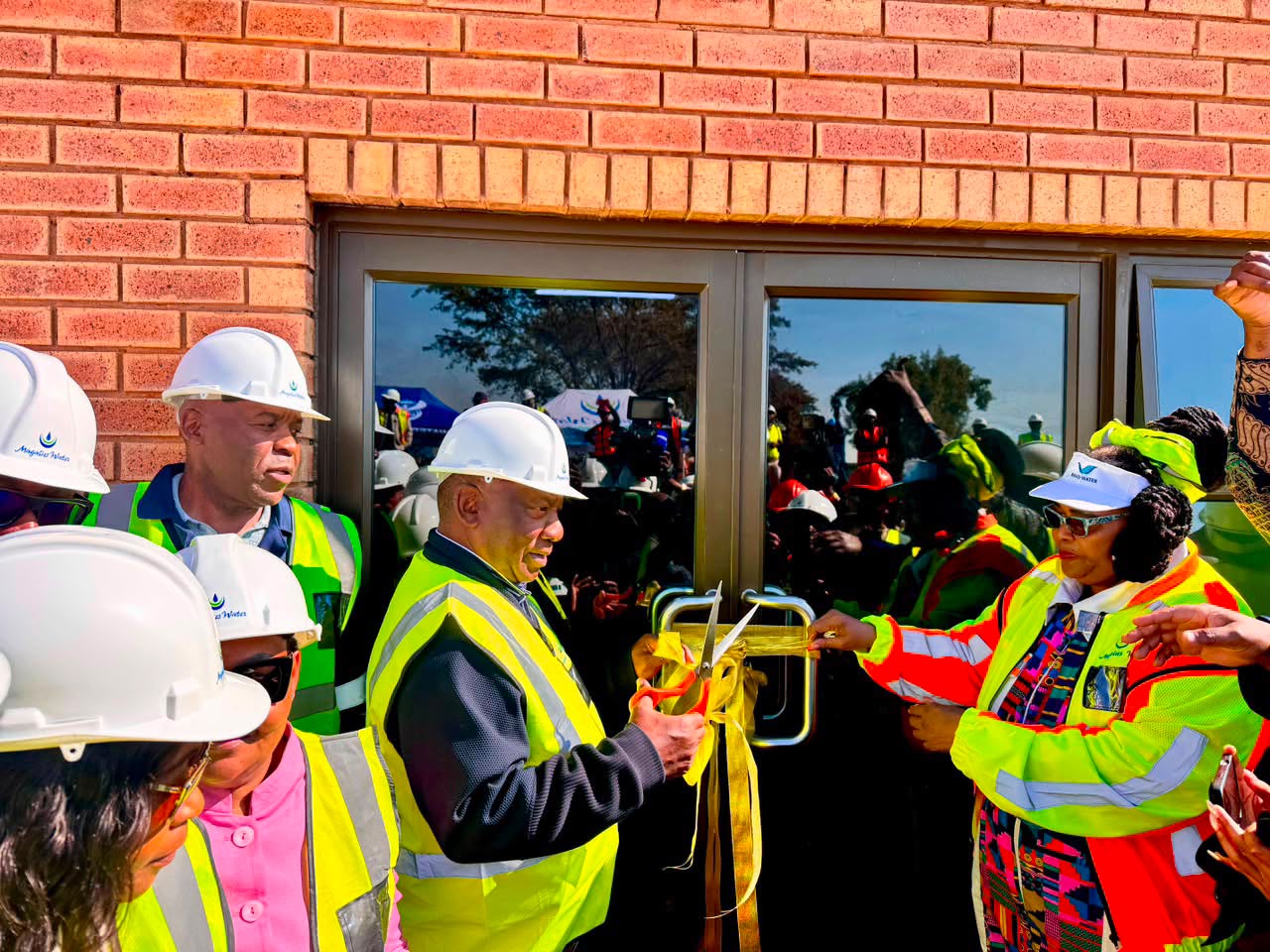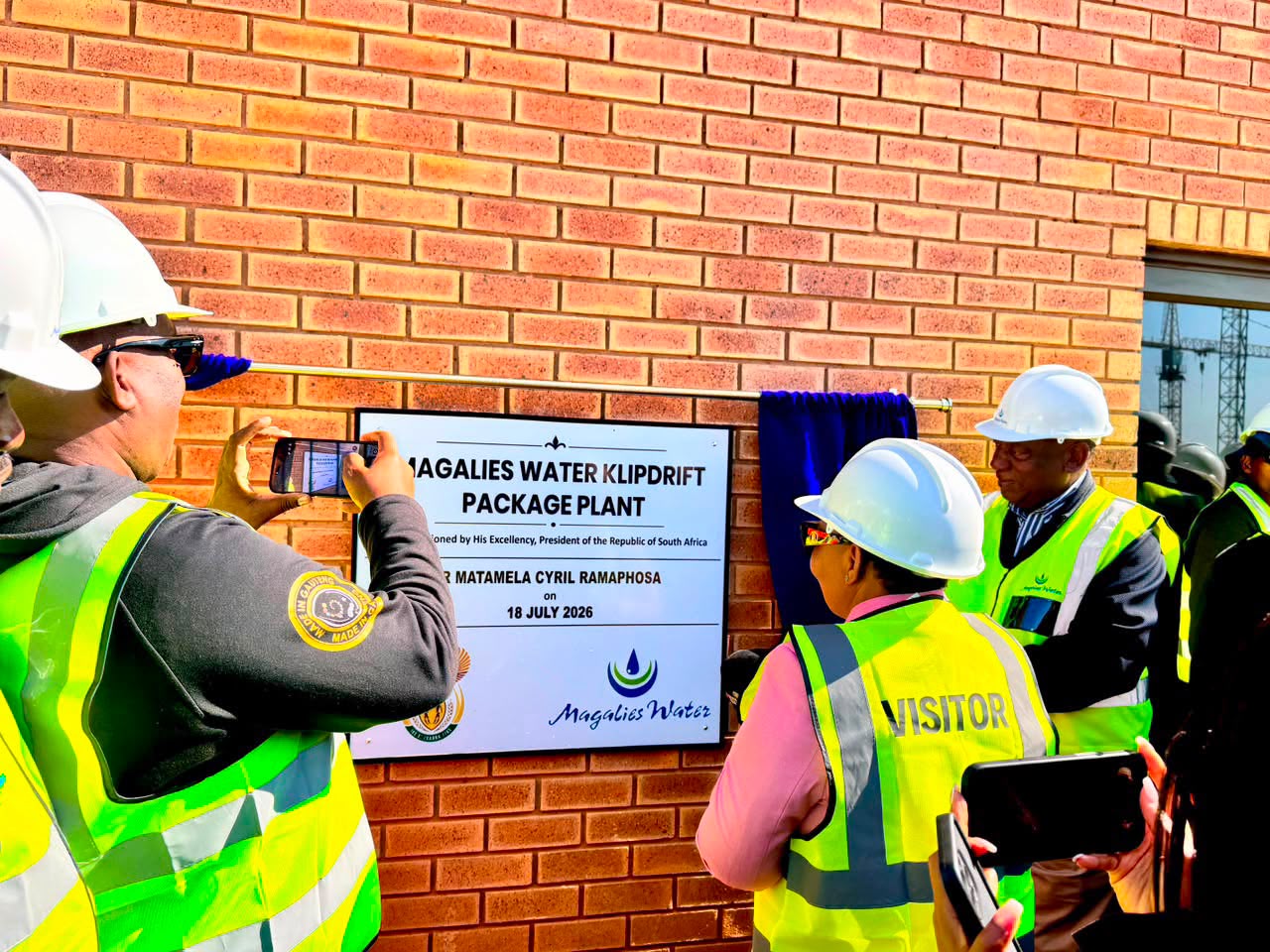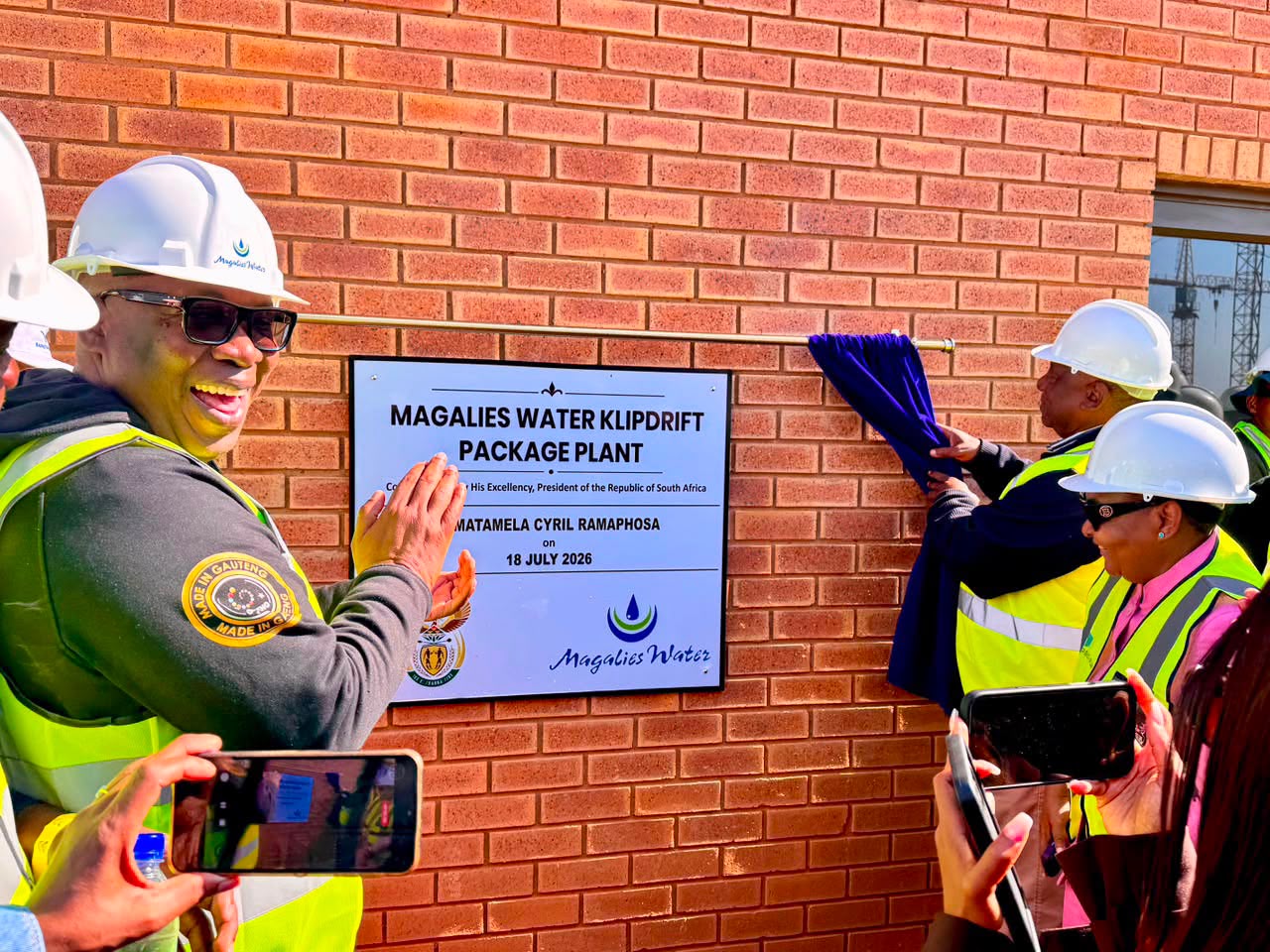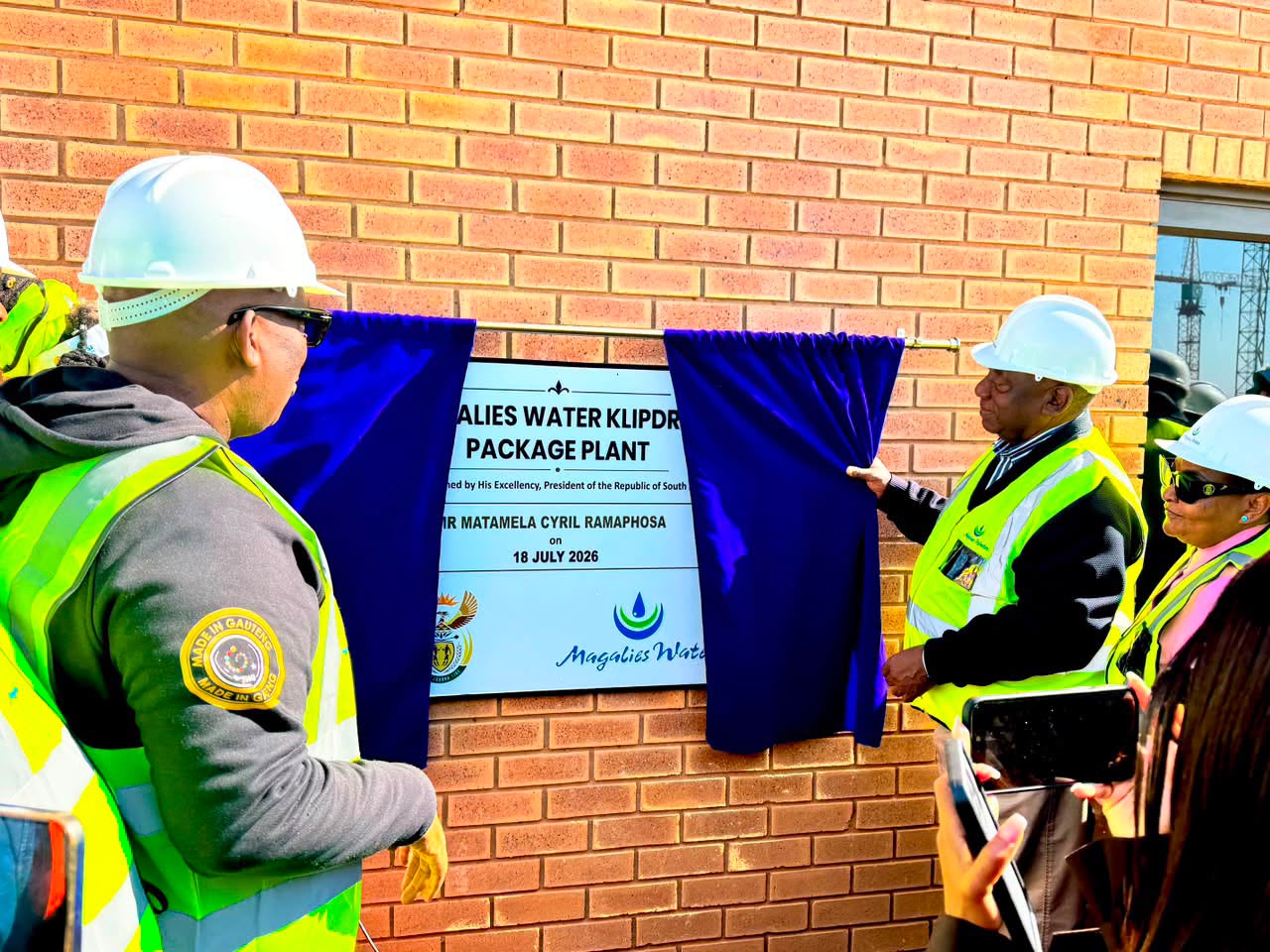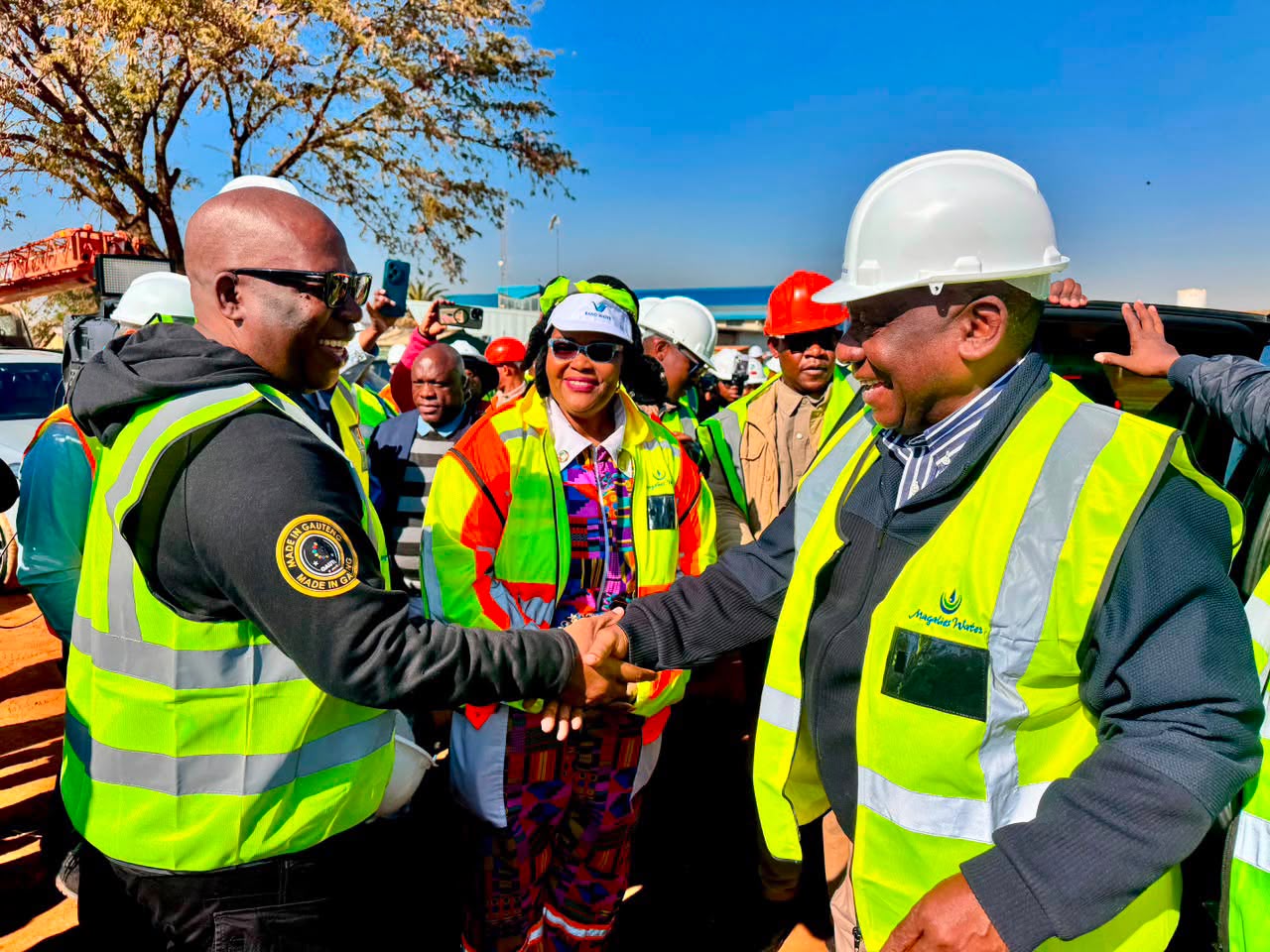
President Cyril Ramaphosa on Saturday launched the National Water Access Acceleration Programme at the Klipdrift Water Treatment Plant in Hammanskraal, alongside Gauteng Premier Panyaza Lesufi and Water and Sanitation Minister Pemmy Majodina, as part of the #MandelaDay2026 commemorations.
The launch coincided with the commissioning of the Klipdrift facility and the handover of decentralised water supply schemes to improve access to clean drinking water in the area. Hammanskraal has faced persistent water quality and supply challenges for years, with residents frequently raising concerns about reliability and safety.
The National Water Access Acceleration Programme is intended to fast-track sustainable water interventions in communities that continue to lack a safe and dependable supply. Government officials say the programme will prioritise practical, fit-for-purpose solutions and improved coordination across national, provincial and local spheres.
Speaking at the event, President Ramaphosa reflected on Nelson Mandela’s legacy and acknowledged ongoing shortcomings in public service delivery.
“Many more hills are to be climbed,” the President said, adding that ensuring reliable basic services remains a central task for government.
He emphasised that addressing South Africa’s water challenges requires closer cooperation across all levels of government, as well as improved infrastructure management and long-term planning.
Premier Lesufi told residents that commitments made to Hammanskraal were now being honoured.
“Where there was no water, water is flowing now. Where there were challenges, we have concluded and resolved all those challenges,” he said.
While the commissioning of the plant represents a significant development, the long-term success of the initiative will depend on consistent maintenance, operational stability and transparent oversight. Water infrastructure projects across the country have in the past faced delays, funding constraints and management difficulties, raising questions about sustainability.
Residents and civil society groups have repeatedly called for accountability and measurable timelines to ensure that improvements are not temporary, as restoring public trust will require not only new infrastructure but also sustained delivery and open communication about progress and setbacks.
Saturday’s event, held on Mandela Day, highlighted the symbolic link between access to basic services and human dignity, a principle central to Mandela’s legacy.